Cryogenics in Life Sciences– What You Should Consider
Cryogenics are becoming increasingly common in biological laboratories, with the requirement for flash cooling and sample preservation being key elements in many scientific experiments.
Cryopreservation is the process of preserving cells, tissues, embryos and organs by using extremely low temperatures. Cryopreservation reduces the metabolic rate to a point where biological activity is practically at a standstill.
Oxygen Depletion
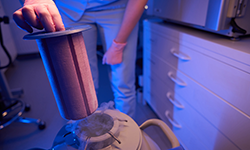
The safety should be at the top of your list when working with cryogens. Cryogens are colourless, tasteless and odourless. Liquid nitrogen expands to a massive 695 times in volume when it vaporises, and as it is heavier than oxygen displaces oxygen in the air leading to a fatal risk of asphyxiation. So, monitoring oxygen levels in your cryorooms is an absolute must! These monitors need to be sited correctly and regularly maintained. An extraction system should be in place, and when those alarms go off, the system ramps into high gear to get the atmosphere back to its normal state ASAP.
Location, Location, Location
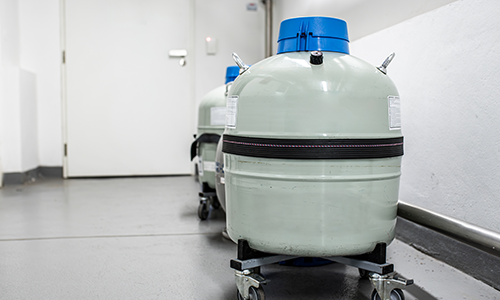
Choosing the right spot for your cryogenic set up is important. It is not just about saving some cash, it’s all about keeping things as safe as possible. The ground floor is the ideal location, with no transportation of dewars (specialised containers holding cryogens) in lifts, and no pressure changes due to rises or falls in pipework.
It is also smart to place your delivery point close to an outside wall. That way, it is easier to get to, and you won’t have to transport dewars long distances or in lifts.
When moving dewars, it is important to be careful and have an appropriate risk assessment. There should be no stairs, kerbs, or bumps. No personnel should enter a lift with dewars and it should only go in a dedicated goods lift, operational from outside. In large high-rise buildings, this can be extremely challenging. Goods lifts should be up to scratch and have a gas alarm.
Size
When planning your cryogenic storage setup, it is not just about today: you’ve got to think about tomorrow too. Going too small now might seem like a cost saver, but if you need to scale up later, it’s going to cost even more and be very disruptive to your day to day work in the lab. Going too big isn’t the answer either. Striking the perfect balance can be tricky. Think about the number of dewars you need, what types, and how easy it is to get to them. There is also a crucial point: the room size should be appropriate for the amount of cryogen you are planning to store. It’s all about that sweet spot.
Security
Keeping the cryoroom secure is a must. Only authorised and trained personnel should be allowed to enter the room. This is not just about protecting the people, but also safeguarding precious samples. So, it is a good idea to use things like access cards or coded entry. In case of an emergency, everyone must be able to get out quickly without fuss.
What Your Room is Made Of
When setting up your cryoroom, don’t forget the details. For starters, think about the type of flooring. It needs to be something hard wearing and can withstand the low temperatures, without cracking or breaking. When it comes to doors, they need to not just be sturdy but designed with safety in mind. Things like vision panels, safety signs and of course access control. These are all important to keep your lab safe, working and also looking its best.
At Bulb Laboratories, we have designed cryostores for a number of clients, whether in high rise buildings in busy London areas, or in multitenant or standalone buildings in Oxfordshire. Our team can look into appropriate ventilation, gas monitoring, room specifications and transport logistics. Contact us today at info@bulblaboratories.com to find out more.