What is a Diagnostic Laboratory?
A diagnostic laboratory is a specialised clinical facility where patient samples, such as blood, tissue or other bodily fluids, are analysed to detect, diagnose and monitor disease. These laboratories support services including pathology, microbiology and molecular diagnostics across hospital and community settings.
They play a vital role in clinical decision-making, providing the evidence clinicians need to plan treatment and care.
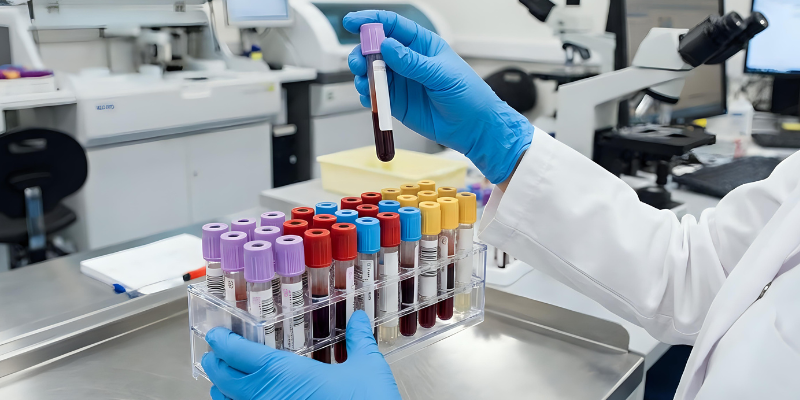
Why Diagnostics Matter
Diagnostic laboratories are central to healthcare delivery, enabling:
- Accurate diagnosis – identifying conditions at an early stage
- Treatment planning and monitoring – guiding therapies and tracking outcomes
- Preventative healthcare – detecting risks before disease manifests
- Healthcare efficiency – enabling faster, evidence-based clinical decisions
Laboratory data informs a significant proportion of clinical decisions, reinforcing the importance of diagnostics across the healthcare system.
Their role will continue to grow as healthcare shifts towards earlier intervention, personalised medicine and population health management.
Typical Locations
The UK diagnostic landscape is moving towards a networked model of provision, including:
- Acute hospitals – for complex and high-volume testing
- Community Diagnostic Centres (CDCs) – improving accessibility and reducing hospital burden
- Primary care settings – supporting early-stage and routine diagnostics
- Science parks, healthcare campuses and city centres – enabling specialist and private provision
This reflects a wider move to bring diagnostics closer to patients, reduce delays and support earlier clinical intervention.
Patient Types
Diagnostic laboratories support a broad and growing patient base:
- Routine patients – referred via primary care
- Urgent and acute cases – requiring rapid diagnostics
- Chronic disease patients – requiring continuous monitoring
- Specialist cohorts – including genomics, fertility, and infectious disease
As services expand, laboratories need to support both scale and specialisation.
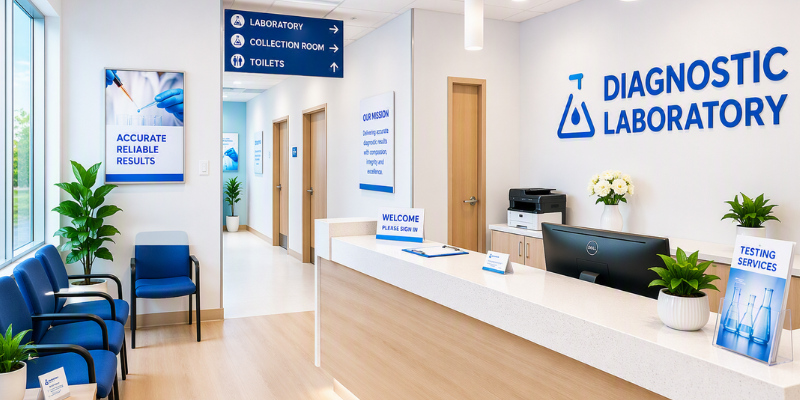
Design Criteria for Diagnostic Laboratories
As diagnostics evolve, the environments that support them must evolve too.
1. Workflow-Led Design
Design should follow the sample journey, supporting speed, accuracy and efficiency.
2. Zoning and Segregation
Clear separation of workflows helps prevent contamination, improve operational clarity and support infection control.
3. Engineering and Infrastructure
Future diagnostics need high-performance ventilation, scalable power and data, and the ability to integrate automation and digital systems.
4. Infection Prevention and Control
Infection control should be built into the layout, materials and day-to-day operation of the space.
5. Flexibility and Adaptability
Laboratories must be able to adapt to new technologies, greater automation and changing clinical needs.
6. Digital and Data Integration
The rise of AI and digital diagnostics means laboratories increasingly need secure data environments, high-bandwidth connectivity and integration with clinical systems.
Patient Visits and Clinical Staff Wellbeing
As diagnostic services move closer to communities through outpatient settings, CDCs and specialist healthcare environments, patient visits should be planned alongside the needs of clinical and laboratory staff.
Clear wayfinding, accessible arrival points, comfortable waiting areas, privacy and efficient appointment flows help patients feel safe, informed and reassured.
For staff, good design should reduce pressure by supporting efficient workflows, safe operations and spaces that protect wellbeing.
Key considerations include:
- Creating clear patient journeys from arrival to consultation, testing, waiting and departure
- Supporting privacy, dignity and accessibility for patients of different ages, mobility levels and clinical needs
- Minimising workflow friction and inefficiencies for clinical and laboratory teams
- Providing access to daylight, rest areas, and ergonomic workspaces for staff
- Creating environments that feel calm, safe, professional and easy to navigate
Well-planned patient visits make services easier to access, support smoother appointments and allow staff to focus on accurate, compassionate care.
Patient experience and staff wellbeing should be designed together, with layouts, adjacencies, waiting areas, consultation rooms, staff bases and back-of-house routes working as one coordinated environment.
Accreditations Required
Diagnostic laboratories in the UK operate within a robust regulatory framework, including:
- ISO 15189 (UKAS accreditation) – the primary standard for laboratory quality and competence
- Health Building Notes (HBN) – planning and spatial guidance
- Health Technical Memoranda (HTM) – engineering and environmental standards
- Care Quality Commission (CQC) – healthcare regulation
- COSHH and HSE regulations – governing safety and hazardous materials
Together, these standards help laboratories deliver safe, reliable and clinically accurate results, while supporting quality and continuous improvement.
Conclusion: Designing for the Future of Diagnostics
The future of diagnostics is faster, more distributed and increasingly data-driven. Laboratories need to become flexible, intelligent environments that can support emerging clinical models.
For organisations investing in diagnostic facilities, the design priorities are clear:
- Design for change, not just current requirements
- Align physical space with digital transformation
- Prioritise staff experience alongside patient outcomes
- Deliver environments that support both performance and adaptability
The most successful diagnostic environments will be those designed around people, care and adaptability. With the right approach, they can support better outcomes today while remaining ready for tomorrow’s healthcare needs. This is where Bulb can help turn good design into practical, future-ready diagnostic spaces.