
The Role of Robotics and Automation in Life Sciences
As technology continuously evolves, the Life Science sector is embracing new tools to improve industries from drug discovery research and production to patient care. Robotics and automation are making a significant impact, changing processes across the board and helping to make everything faster, more accurate, and more efficient.
Increasing the Speed of Drug Discovery Research & Development
Drug discovery is a challenging and laborious task which takes up time and resources. However, with the introduction of robotics and automation in the workplace, researchers are minimising the resources required.
Automated systems can calculate thousands of potential drug compounds in a fraction of the time it would take a person to do it manually; this not only speeds up the process but also reduces human error, leading to more accurate results. Robots are also helping in the world of Genomics and Molecular Biology. Tasks like DNA extraction, preparing samples, and sequencing are all tasks which robots can now undertake. Automating these processes means researchers can focus on analysing the results and moving forward with their work faster.
Making Manufacturing More Efficient
When it comes to developing pharmaceutical products, automation has marked a notable change. Robots now take care of routine tasks such as filling vials, packaging, labelling, and performing quality checks. Thus, reducing the chances of mistakes and ensuring that the products meet the strict standards set by health authorities. The process of monoclonal antibody production and gene therapy benefit from the use of automation, as they can oversee delicate tasks such as cell culture and fermentation with incredible precision which is essential for creating these complex treatments safely.
Thanks to automation, the discovery of personalised medicine is becoming more feasible by the ability to scale production for custom treatments, gene therapies and vaccines tailored to individual patients. The use of automation and robots ensure that each batch produced is consistent and accurate.

Improving Clinical Trials and Patient Monitoring
Clinical trials are vital for discovering new treatments, but they can be a complicated and slow process. Robotics and automation are facilitating the process by handling tasks such as data collection, patient sample analysis, and even drug administration. This leads to faster results and fewer errors.
Robots can even assist in directly collecting samples or giving treatments to patients, reducing contamination risks and makes everything run more smoothly. Automation tools can also monitor patients remotely, ensuring that they are sticking to trial protocols and reducing human bias.
The Growing Role of Robotics in Healthcare
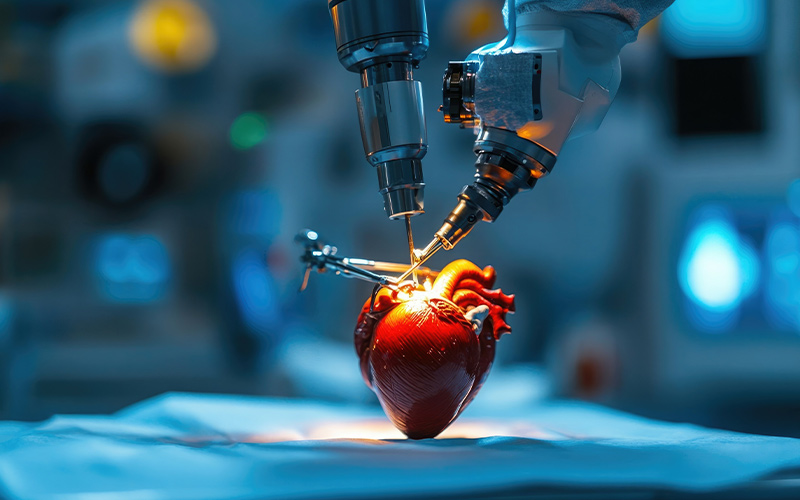
The use of robotic surgery systems gives doctors more control, precision, and flexibility, leading to quicker recovery times and fewer complications for patients. This allows minimal invasive surgeries to be much more effective. Robotic exoskeletons and prosthetics can assist physical rehabilitation by helping patients with spinal cord injuries regain mobility.
There is also a huge benefit of autonomous robots in hospitals as they help to move supplies, medications and samples, reducing the workload on staff and chances of human error. These robots are especially helpful in high-stress areas like intensive care units, where every second counts.
AI and Data Analysis in Life Sciences
Another exciting development is the integration of Artificial Intelligence (AI) within robotics. AI helps robots analyse vast amounts of data from clinical trials to patient outcomes faster than any human could. AI can find trends, predict outcomes, and help guide decision-making in real-time. AI-powered robots even perform experiments, analyse the results, and adjust their next steps based on the findings. This ability to learn and adapt is pushing forward new discoveries, especially in areas like cancer research, where every tiny bit of data can lead to breakthroughs.
Check out our article – AI in Life Sciences – A Macromolecular Crystallographer’s Perspective here.
The Future of Robotics and Automation
The role of robotics and automation in life sciences will continue to grow. AI will continue to improve, and robots will become smarter, leading to huge improvements in drug development, manufacturing, and in patient care. In the future, we could see robots working at the cellular or even molecular level delivering drugs to specific areas of the body or diagnosing diseases by cell analysis. These technologies will make early diagnosis and real-time data analysis more accurate, helping doctors diagnose problems earlier and improve outcomes.
What are the challenges?
Robotics and automation have many benefits, but there are still some challenges that remain. One challenge preventing the set-up of automation and robotics systems is the associated costs that come with the technology. Smaller companies or research labs may struggle to afford these tools. Another challenge is the concerns surrounding data privacy and security due to processes becoming automated. Healthcare workers and researchers will need to undergo training to work with these new systems, and it will be important to make sure automation tools are user-friendly and can integrate smoothly into existing workflows.
Summary
The impact of robotics and automation on the Life Science industry is huge. These technologies are transforming research to drug production and healthcare delivery by making processes faster, dependable, and more efficient. As they continue to evolve, we can expect more breakthroughs that could improve patient outcomes, save lives, and make healthcare more accessible to all.
Bulb Laboratories, part of Unispace Life Sciences, are the UK’s leading laboratory specialists providing design, consultancy, construction, and compliance services. With in-house expertise in science (end-user), laboratory design, engineering, and construction, we have unique credentials to cater to the complex needs of laboratory fit-out and refurbishment. Get in touch at or call 0118 988 9200.