Science & Technology Research Trends – 2026 & Beyond
“Science is moving faster than the buildings that house it” – this was the recurring observation at a recent conference I attended, and it stayed with me. The labs and innovation spaces we design today need to keep pace with research that is evolving at an unprecedented rate. In this article, I’ve presented a high-level snapshot of the leading life sciences and technology research trends shaping 2026 and what they mean for the infrastructure that supports them.
Life Science Research Trends
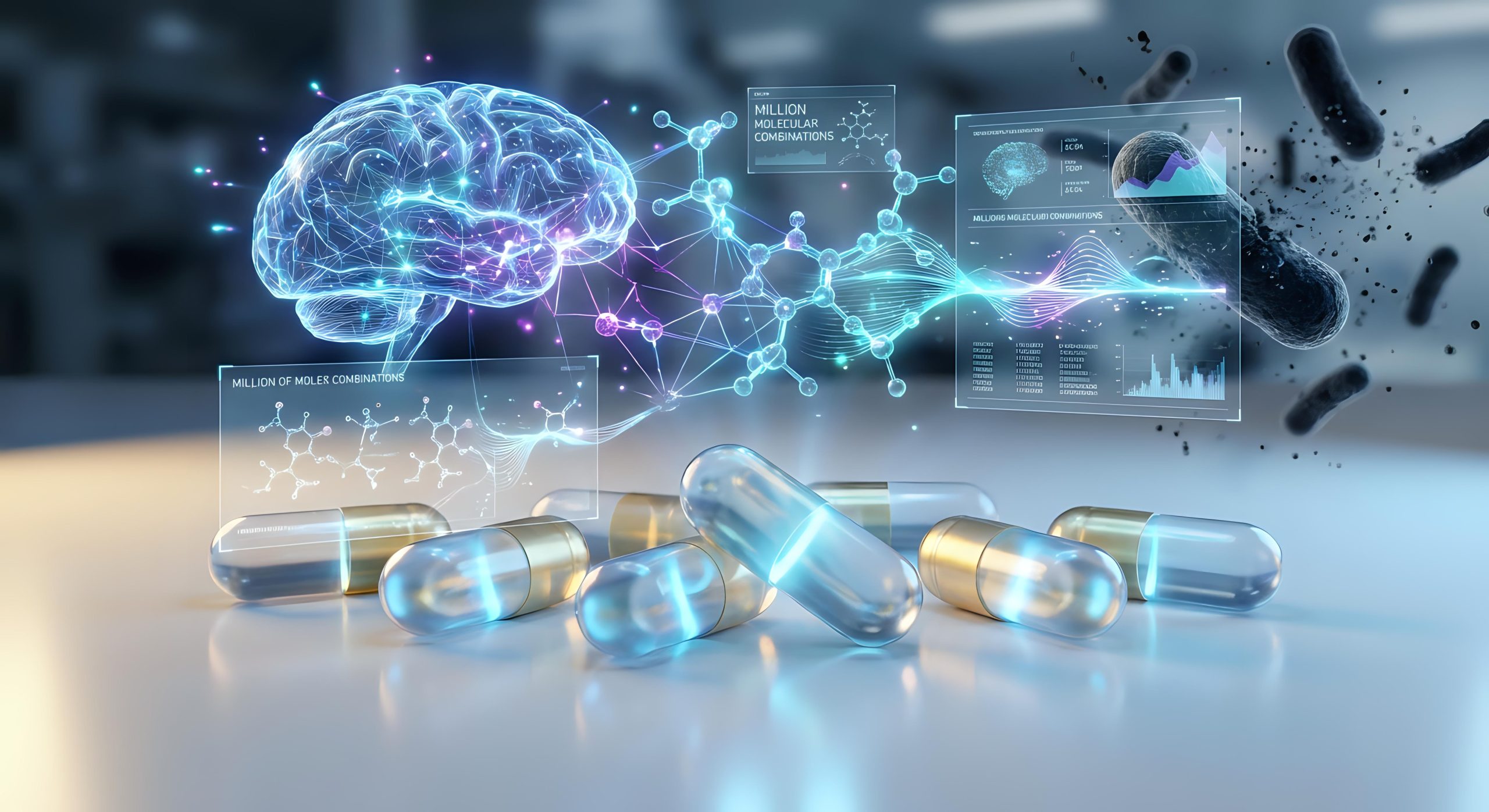
The key trends shaping 2026 are
1. Genomic Medicine & Gene Editing
The tools scientists use to edit DNA are constantly improving. Beyond the well-known CRISPR method (a tool that edits DNA), newer techniques called base editors and prime editors are emerging – these allow even more precise, targeted changes to DNA with fewer errors.
A key challenge researchers are focused on is delivery – how to actually get these gene-editing tools into the right cells inside the body. Scientists are developing smarter “vehicles” to carry them, including:
- Engineered viruses (modified to be safe and effective)
- Virus-like particles (which mimic viruses without being infectious)
- Tiny biological nanoparticles derived from mammalian cells
Getting this delivery system right is considered one of the most critical hurdles before these therapies can become widely used treatments.
In 2025, scientists made a major breakthrough in slowing Huntington’s disease – a serious brain condition. This success is now inspiring researchers to tackle similar diseases in 2026, where a part of a person’s DNA gets copied too many times, causing problems in the body.
To study these diseases properly, doctors need a special type of genetic testing called long-read sequencing, which is currently the only tool capable of examining these faulty DNA patterns accurately in one go.
2. Cell & Gene Therapy (CGT) Pipeline
Treatments that work by modifying or replacing a patient’s cells or genes are booming – there are now over 4,400 of these therapies being developed or tested. More and more hospitals are adopting cutting-edge treatments like CRISPR and CAR-T therapy (where a patient’s immune cells are reprogrammed to fight disease).
A particularly exciting development is “off-the-shelf” CAR-T therapy, pre-made treatments that don’t need to be custom-built for each patient, making them faster and cheaper to deliver. However, scientists are still working through some challenges around safety, how the body might reject these treatments, and how to manufacture them reliably at scale.
3. Multi-Omics & Systems Biology
Scientists are now combining multiple cutting-edge techniques to build a much fuller picture of how the body works and how diseases develop. Rather than studying just one aspect of biology, multi-omics pulls together information from many different layers – genes, proteins, metabolism, and more – helping researchers better understand diseases, find early warning signs (biomarkers), and identify new targets for drugs.
A notable example is pTau-217, a newly validated biomarker for Alzheimer’s disease, which is helping accelerate research in neurology.
The bigger takeaway for 2026 is that no single technology is driving progress on its own. Instead, the real power comes from combining them – merging biology with data, human insight with AI, and automation with precision tools like gene editing and long-read sequencing. The future of medicine lies in making all these technologies work together seamlessly.
4. AI-Driven Drug Discovery & Target Identification
Scientists are now using AI-powered systems connected directly to laboratory databases (LIMS), allowing them to analyse vast amounts of biological data all at once. This is uncovering patterns and clues about diseases that would have been impossible to spot manually. Finding potential drug targets – once a slow, painstaking process – is becoming faster and more automated.
The real-world impact is already being felt. The company Insilico Medicine used AI to cut the early-stage development of a drug for fibrosis (scarring of organs) from 6 years down to 2.5 years. Their drug Rentosertib – considered the world’s first fully AI-discovered medicine – is now showing strong potential as a treatment for lung disease.
5. Liquid Biopsy & Multi-Cancer Early Detection
Liquid biopsy, a simple blood test that can detect cancer-related signals without invasive surgery, is being used at earlier and earlier stages of cancer care, not just in advanced cases.
A key development is the growing use of MRD (Minimal Residual Disease) testing, which checks whether tiny traces of cancer remain in the body after treatment, helping doctors decide whether further treatment is needed.
There’s also exciting progress in multi-cancer early detection – blood tests capable of screening for several types of cancer at once – with a number of these tools now being used in real clinical settings for the first time.
6. Synthetic Biology
Synthetic biology is enabling scientists to design and build biological systems from scratch – think of it as engineering with living cells. The field is driving sustainable alternatives to traditional manufacturing (such as bio-based materials and chemicals) as well as new therapeutic approaches.
What makes 2026 notable is the maturity of the toolkit. Researchers can now combine gene-editing (CRISPR), programmable genetic switches that turn cellular processes on or off, and techniques for assembling DNA sequences rapidly and accurately, all to reprogram microorganisms for real-world applications, from biodegradable packaging to novel medicines.
7. Longevity & Aging Science
There is growing scientific interest in understanding – and potentially reversing – the ageing process. At the molecular level, researchers are mapping out which genes control how cells renew and repair themselves.
One notable example: a company has built what it calls an “Atlas of Rejuvenation” – essentially a detailed map of rejuvenation biology – by scanning over 3 million cells to identify more than 100 genes linked to how human stem cells regenerate. This kind of large-scale analysis would have been unthinkable just a few years ago.
More broadly, regenerative medicine – which uses stem cells and related technologies – is opening up promising new possibilities for both slowing ageing and treating diseases where the body’s tissues gradually break down, such as Parkinson’s and heart disease.
8. Next-Generation Sequencing (NGS)
Next-generation sequencing (NGS) is a modern method of analysing genetic material that allows for the rapid sequencing of large amounts of DNA or RNA. Rapid miniaturisation in next-generation sequencing is unlocking new opportunities in rare disease research, while breakthroughs in liquid biopsy technology are transforming early and multi-cancer detection. Long-read sequencing in particular is becoming indispensable for structural variant analysis and the characterisation of complex genomic regions that short-read platforms cannot resolve.
The overarching scientific theme for 2026 is convergence – the integration of genomic, proteomic, and computational tools into unified platforms capable of addressing disease complexity at a systems level, rather than through isolated molecular interventions.
Technology Research Trends
1. Agentic & Multi-Agent AI Systems
AI is rapidly moving beyond simple question-and-answer tools. Multi-agent systems allow multiple AI “agents” to work together like a team, each handling different parts of a complex task – making automation faster and more powerful. Meanwhile, AI models built specifically for industries like healthcare or law are delivering more accurate, specialist results.
Perhaps most ambitiously, AI is beginning to act as a genuine scientific partner – not just summarising existing research, but actively contributing to discovery by generating new hypotheses, running experiments, and collaborating with human researchers in fields like biology, chemistry, and physics.
This marks a significant shift from AI as a tool to AI as a colleague.
2. Quantum Computing
Quantum computing, a fundamentally different and far more powerful approach to computation, is approaching a historic milestone. IBM has predicted that 2026 will be the year a quantum computer first outperforms a traditional computer on a meaningful real-world problem.
This matters because quantum machines can theoretically solve problems that are simply too complex for even the best conventional computers, with significant implications for drug discovery, materials science, and financial modelling. Researchers describe this as a “years, not decades” moment and early pilot programmes in finance, pharmaceuticals, and aerospace are already bearing this out. In some quantum-assisted simulations, complex problems that once took days are being solved in hours.
3. Neuromorphic Computing
Neuromorphic computing takes inspiration from how the human brain works – only activating when needed, rather than running continuously. This makes it dramatically more energy -efficient compared to the powerful but power-hungry chips (GPUs/TPUs) used in most AI today, which consume hundreds of watts and generate significant heat.
Beyond saving energy, neuromorphic systems have some unique advantages – they’re particularly good at processing data that changes over time, learning continuously without needing to be fully retrained, and making fast decisions in real time. This makes them well-suited for applications like industrial fault detection and augmented reality.
Researchers are actively working on developing neuromorphic systems for highly complex scientific simulations at the molecular level.
4. Physical AI & Robotics
Physical AI brings intelligence into the real world, powering robots, drones, and smart equipment for operational impact. Amazon has deployed its millionth robot, with its DeepFleet AI now coordinating entire robot fleets; BMW factories have vehicles driving themselves through kilometre-long production routes. Research is converging on tighter integration – moving from narrow task-specific automation toward generalised physical reasoning in unstructured environments.
5. Next-Generation Semiconductor Architectures
The chips that power AI are on a clear development roadmap. In the near term (2025–2027), engineers are squeezing more performance out of existing technology – making chips smaller, more efficient, and better packaged together. In the mid-term (2028–2030), the industry will need to move beyond the limits of traditional chip-making and explore new ways of combining different types of processors. Looking further ahead, entirely new computing approaches -including quantum-assisted chips – may reshape the landscape.
At the same time, the AI infrastructure world is moving towards open standards – shared rules that allow different companies’ hardware and software to work together seamlessly. This is breaking down the “walled gardens” that previously locked organisations into a single vendor’s ecosystem, making it easier and more flexible to build powerful AI systems from the best available components.
6. AI-Powered Climate Modelling & Energy Storage Materials
AI is speeding up scientific progress in areas critical to tackling climate change -from better climate models to designing new materials at the atomic level.
On energy storage, next-generation battery technologies are emerging that could outperform traditional lithium-ion batteries on both cost and availability of raw materials. By 2026, some of these – including metal-air batteries that use widely available metals instead of lithium – are expected to be ready for large-scale commercial use.
Driving much of this progress is the combination of AI and materials science. AI tools can now explore vast ranges of unknown chemical combinations and predict how new materials will perform- tasks that would take human researchers years to do manually.
This is fundamentally changing how scientists design the next generation of batteries and energy storage solutions.
7. 6G & Advanced Connectivity
The world’s wireless networks are advancing rapidly on multiple fronts. 5G is now mainstream, expected to cover a third of all global connections in 2026, while Wi-Fi 7 is delivering speeds three times faster than its predecessor. Meanwhile, 6G – the next generation of mobile networks is already in development, promising entirely new capabilities beyond just faster speeds.
The biggest theme in computing for 2026 echoes what’s happening in biology, everything is converging. Quantum computers, neuromorphic chips, and traditional processors are no longer developing as separate technologies. Instead, they are being combined into hybrid systems where each type handles the tasks it’s naturally best at – working together like specialists on a team rather than competing to be an all-in-one solution.

Where The Disciplines Meet
These trends may seem separate – biology, quantum computing, and design – but their boundaries are dissolving.
In modern drug discovery, a researcher identifies a genetic target using multi-omics data. AI models rapidly screen millions of molecules, while robotic labs run experiments and feed results back in real time. Biology, computation, and automation now operate as a single loop.
Similarly, building a self-driving lab isn’t just technical – it reshapes how scientists work, the skills they need, team structures, and the spaces they use. Traditional labs can hinder the cross-functional collaboration this model requires.
The real shift in 2026 is not individual advances in genomics, AI, or automation, but their convergence – each accelerating the others.
For those designing these environments, the implication is clear: we’re no longer designing for specific disciplines, but for convergence itself. This requires greater flexibility and earlier collaboration between scientists, technologists, and designers.
Global Trends Shaping Innovation Spaces
These UK trends are unfolding within a larger global shift in how science is physically conducted. They’re reshaping how and where science is physically done, with direct consequences for the spaces we design.
Self-driving labs are becoming the norm
The most advanced research facilities today automate nearly the entire scientific process – from forming a hypothesis and designing experiments, through to analysing results and refining the next round of tests. Cloud-based “lab-as-a-service” platforms now let researchers run experiments remotely, without ever entering a physical lab. The US Department of Energy’s Genesis Mission is funding an AI-driven discovery platform that links supercomputers, scientific datasets, and autonomous labs – a clear signal of where this is heading at scale.
The physical footprint of labs is changing
As AI and automation take on more routine work, the balance of space is shifting. Wet lab benches are giving way to digital workstations, robotic zones, and collaborative areas – with some design teams now planning for ratios of 40% wet to 60% dry space, or even 30/70. Science is converging with technology culture, and the spaces that house research need to reflect that.
Design is becoming a talent tool
In competitive innovation hubs – London, Boston, the Bay Area – the quality of a workspace is increasingly a factor in attracting world-class researchers. The physical environment is part of the offer.
Automation is becoming truly autonomous
Traditional lab automation is excellent at repeating a defined protocol. What’s new is systems that can adapt – where a scientist can simply request an experiment in plain language and the lab configures itself to run it.
Implications For Lab & Manufacturing Space Design
Taken together, these trends point to several clear implications for the science and technology spaces we design:
- Interdisciplinary research – acceptance and preparation for interdisciplinary research spaces, from lab planning to building services to day-to-day operations.
- Robotics-ready infrastructure – power, payload, floor loading, ceiling clearance and workflow routing for robotic arms and autonomous mobile robots are becoming baseline requirements, not optional extras.
- Wet/dry lab balance is shifting – buildings need far greater flexibility to reconfigure wet lab space to dry lab, compute and collaboration as the ratio continues to evolve.
- Data infrastructure is now core lab infrastructure – high-bandwidth networking, computing capability and data storage are as important as fume cupboard density.
- Talent magnets, not just workplaces – to attract and retain world-class researchers organisations will be competing hard for people – and the physical space is part of that pitch.
- Energy resilience – the pressure on large-scale facilities budgets due to rising electricity costs, combined with net-zero commitments, makes energy performance and onsite generation increasingly critical.
At Bulb, our approach to lab design and delivery evolves alongside the science and technology it supports. In our follow-up article, we’ll explore in depth what these trends mean for the practical design of labs and manufacturing spaces – from robotics-ready infrastructure to energy resilience.
In the meantime, if you’d like to discuss how your organisation is thinking about its research environment or explore what these trends might mean for your next project we’d love to hear from you.
Glossary
| Term | Long form / meaning |
|---|---|
| CRISPR |
|
| Base editor |
|
| Prime editor |
|
| Delivery system |
|
| Long-read sequencing |
|
| Cell and gene therapy |
|
| CAR-T therapy |
|
| Multi-omics |
|
| Systems biology |
|
| Biomarker |
|
| Liquid biopsy |
|
| MRD |
|
| NGS |
|
| LIMS |
|
| Agentic AI |
|